Under-Sink vs Countertop Water Filters: Which One Is Right for You?
Recommended picks

How Each System Connects to Your Water Supply
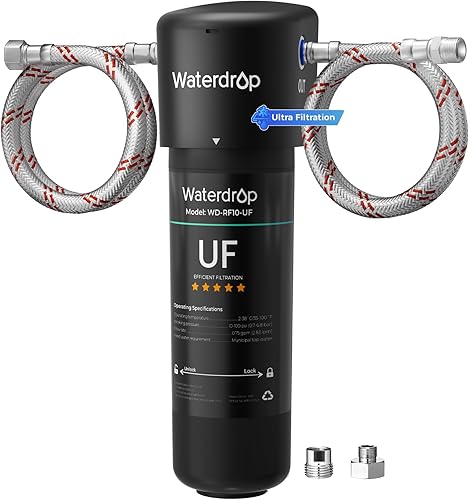
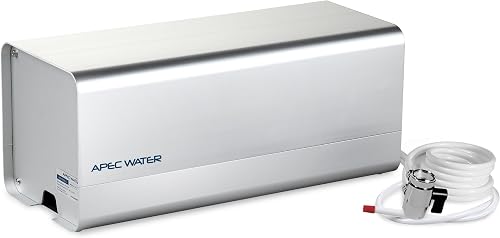
An under-sink system taps into the cold-water line under the cabinet using a saddle valve or compression fitting, then runs filtered water to a separate dispenser faucet drilled into the sink deck or countertop. Most reverse osmosis under-sink models, like the Apec Water ROES-PH75 (rated 4.6 from 4,000 reviews, around $240), add a small storage tank that holds purified water so you always have a ready supply even when the membrane is working slowly. Countertop reverse osmosis units such as the Apec Water RO-CTOP-C connect to your faucet with a diverter valve and feed directly into a dispenser on the counter, priced around $289. Freestanding gravity countertop systems need no connection at all: you pour water into the top chamber and gravity pulls it through the filter media. Each connection method has tradeoffs for flow rate, convenience, and ease of moving the unit.
Filtration Method and What Each Can Reduce
Reverse osmosis systems, whether under-sink or countertop, push water through a semipermeable membrane that is designed to reduce dissolved solids including chlorine byproducts, certain heavy metals, and nitrates. Simple under-sink carbon block filters like the Waterdrop WD-10UA-UF (4.6 rating, nearly 4,900 reviews, around $64) use activated carbon to reduce chlorine taste and odor along with some organic compounds, but they do not reduce dissolved solids the way an RO membrane does. Gravity countertop systems use proprietary filter media or activated carbon and are designed to reduce sediment, chlorine, and some contaminants, but their specific reduction claims vary by brand and filter type. If your goal is to reduce total dissolved solids or specific dissolved contaminants, look for a system designed around reverse osmosis technology and verify what the manufacturer states the unit is designed to reduce. No filter of any type guarantees medical-grade results, and none of the products in this guide should be treated as a substitute for professional water testing.
Space, Installation, and Upfront Cost
Under-sink systems need cabinet space for the filter housing and, on RO units, a storage tank that typically measures 12 to 18 inches tall. You will also need to drill a hole for the dedicated faucet unless your sink already has an unused hole. The Apec Water ROES-PH75 measures 15.5 by 5.25 by 17.5 inches, so a typical 36-inch base cabinet with a standard P-trap arrangement can usually accommodate it. Countertop units range from compact carbon-block cylinders measuring around 4 inches in diameter to larger RO dispensers that may take up a meaningful section of counter. Gravity freestanding systems tend to be tall, with stainless steel models often reaching 19 to 30 inches in height, so they may not fit under upper cabinets. Upfront costs lean lower for simple carbon under-sink filters (under $100 for some models) and climb with RO systems that include pumps, tanks, and multiple filter stages.
Ongoing Filter Costs and Replacement Schedules
Under-sink activated carbon filters can cover wide ranges, from a few thousand gallons to tens of thousands of gallons per filter, so annual replacement cost varies significantly by model. The Waterdrop WD-10UA-UF is rated for 8,000 gallons per filter, which for most households translates to roughly one to two years of use before the filter needs replacing. RO systems require replacing multiple filter stages on different schedules: sediment and carbon pre-filters typically need attention every 6 to 12 months, and the RO membrane every one to two years depending on water quality and volume. Countertop gravity units with proprietary filter media often price replacement elements at a premium compared to generic-compatible filters, so check filter availability and cost before committing to a system. Comparing cost-per-gallon across competing systems gives a cleaner picture than looking at purchase price alone.
Who Should Choose an Under-Sink System
Under-sink filters are a practical fit for homeowners who want filtered water delivered directly at the sink without any visible equipment on the counter. They work well in kitchens where counter space is tight, and an RO under-sink system is a good match for households concerned about dissolved solids given their design to reduce a broader range of impurities than carbon-only systems. Renters can use under-sink systems too, though reversible installations using compression fittings make removal easier when you move. If your water use is high, an under-sink RO tank system is generally a better fit than a countertop RO dispenser because the tank keeps a supply ready rather than making you wait for each batch.
Who Should Choose a Countertop System
Countertop and freestanding gravity systems are well suited to renters, frequent movers, or anyone who wants filtered water without any drilling or plumbing work. Countertop RO units that connect via a faucet diverter are straightforward to set up and move to a new location, making them a flexible option if you want RO-quality filtration without a permanent installation. Gravity countertop systems are the most portable option and work without any water pressure at all, which makes them useful in situations where tap access is limited. The main tradeoffs are counter footprint, the need to manually fill gravity systems, and generally lower output rates compared to pressurized under-sink RO units. If counter space is not a constraint and you prefer simplicity over maximum output, a countertop filter is a reasonable choice.
Common mistakes to avoid
- Choosing a countertop gravity system expecting it to perform like a reverse osmosis membrane: gravity carbon filters and RO membranes are designed to reduce different things, and they are not interchangeable.
- Ignoring the storage tank size on under-sink RO systems: a small tank means you may run out of filtered water during cooking or back-to-back glass fills and wait several minutes for the membrane to refill it.
- Forgetting to factor in filter replacement cost and availability: some countertop systems use proprietary cartridges that are expensive or hard to source, which adds significantly to the total cost of ownership.
- Drilling the dedicated faucet hole in the wrong spot: once drilled, the hole is permanent, so measure the faucet reach and clearance to the sink edge before you mark the position.
- Buying an under-sink RO system without checking the incoming water pressure: most residential RO systems are designed for 40 to 80 psi, and low pressure reduces output rate and membrane performance.
- Assuming all countertop units are truly portable: some countertop RO dispensers are heavy (the Apec Water RO-CTOP-C weighs 10 lb), and models with a tank or glass reservoir can exceed 20 lb when full, so verify weight if you plan to move the unit regularly.
Frequently asked questions
Do I need a plumber to install an under-sink filter?
Most basic under-sink carbon filters use push-fit or compression fittings that connect to the existing supply line without soldering or special tools. Reverse osmosis systems add a few more connections, including a drain saddle and a dedicated faucet, but many homeowners with basic DIY comfort complete the install in one to two hours. If you are not comfortable cutting a water line or drilling a faucet hole, hiring a plumber for the initial setup is a reasonable investment.
Can a countertop RO unit produce as much water as an under-sink RO system?
Countertop RO units generally produce water on demand in smaller batches, while an under-sink RO system with a pressurized storage tank keeps filtered water ready at any time. For a single person or small household this often works fine, but for families that use filtered water for cooking and drinking throughout the day, the on-demand batch output of a countertop unit can feel limiting. Under-sink RO systems rated at 75 to 100 gallons per day, like the Apec Water ROES-PH75 (75 G per day) or the Apec Water ROES-100 (100 G per day), keep up with household demand more comfortably.
Is reverse osmosis better than activated carbon filtration?
They serve different purposes, so 'better' depends on your water quality goals. Activated carbon filtration is designed to reduce chlorine taste and odor, certain organic compounds, and sediment, and it typically maintains more minerals in the water. Reverse osmosis is designed to reduce a broader range of dissolved impurities including certain heavy metals, nitrates, and dissolved solids, but it also removes naturally occurring minerals and produces some wastewater in the process. If you want to address dissolved solids or specific contaminants that carbon alone is not designed to reduce, an RO system is worth considering. A water quality test for your tap supply is the most direct way to decide which technology fits your situation.
What is the wastewater ratio on under-sink RO systems?
Traditional under-sink RO systems produce a drain stream alongside the filtered output, and older designs could waste three to five gallons for every gallon of filtered water. Newer tankless and pump-assisted models have improved this significantly, with some claiming ratios closer to 1 to 1 or 2 to 1 depending on your water quality and pressure. Check the manufacturer specification for the specific model you are considering, and keep in mind that very hard or heavily mineralized water will generally increase wastewater output.
Can I use filtered water from either system for cooking, not just drinking?
Yes, both under-sink and countertop filter systems are commonly used for cooking water as well as drinking. An under-sink system with a dedicated faucet makes this convenient since filtered water is always at the tap. Countertop gravity or dispenser units require you to fill pots or pitchers manually from the unit, which works fine for smaller cooking tasks but can be slow for filling a large stockpot. Contact hello@aquagroove.com if you have a specific question about water use in your kitchen setup.