Waterdrop WD-10UA-UF vs Apec Water ROES-PH75 Filtration System
The Waterdrop WD-10UA-UF and the Apec Water ROES-PH75 are both under-sink filtration systems, but they take fundamentally different approaches to cleaning your tap water. The Waterdrop uses activated carbon to reduce chlorine taste, odor, and sediment, while the Apec ROES-PH75 uses reverse osmosis, a multi-stage process designed to reduce a broader range of dissolved contaminants. At $63.99 versus $239.99, the price gap is significant and reflects the difference in technology and installation complexity. Both carry a 4.6-star rating, with the Waterdrop drawing on roughly 4,900 reviews and the Apec on about 4,000, so both have strong buyer confidence behind them. Your choice comes down to whether you need basic taste and odor improvement or more thorough contaminant reduction.
Quick winner
The Apec ROES-PH75 is the stronger pick for households that want reverse osmosis-level contaminant reduction; the Waterdrop WD-10UA-UF is the better fit for renters or budget-conscious buyers who need a simple, low-cost activated carbon upgrade.
Key differences, measured
- The Waterdrop WD-10UA-UF is 73% cheaper ($63.99 vs $239.99).
- The Apec Water ROES-PH75 is 0.1 lb heavier (1.41 lb vs 1.34 lb).
Side-by-side specs
| Spec | Waterdrop WD-10UA-UF Filtration System | Apec Water ROES-PH75 Filtration System |
|---|---|---|
| Price | $63.99 | $239.99 |
| Rating | ||
| Purification | Activated Carbon | Reverse Osmosis |
| Capacity / life | 8000 Gallons | 75 G/Day |
| Install | Under-Sink | Under-Sink |
| Material | Nsf/Ansi Approved Components | Polypropylene |
| Dimensions | 3.9 X 3.6 X 12.3 In | 15.5 X 5.25 X 17.5 In |
| Weight | 1.34 lb | 1.41 lb |
The two contenders
Waterdrop WD-10UA-UF Filtration System
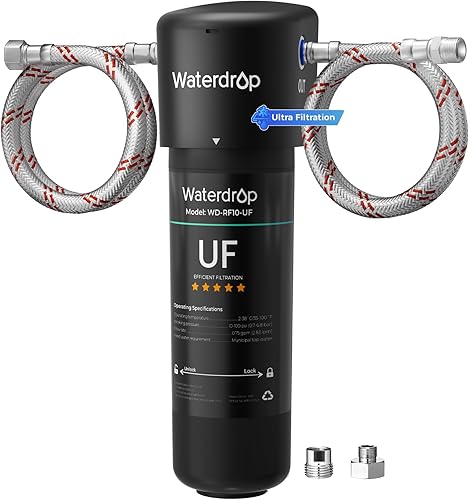
The Waterdrop WD-10UA-UF is a compact under-sink activated carbon filter priced at $63.99. It is rated to handle up to 8,000 gallons before a filter change is needed, which works out to roughly two years for an average household. At 1.34 lb and 3.9 x 3.6 x 12.3 in, it is one of the smaller under-sink units available and fits easily in tight cabinet spaces. Components are described as NSF/ANSI approved, and the unit has a 4.6-star rating across nearly 4,900 reviews. Activated carbon filtration is well suited to improving taste and reducing chlorine byproducts, though it does not strip dissolved solids the way a reverse osmosis membrane does.
Buy this if: Renters or homeowners on a tight budget who mainly want to cut chlorine taste and odor from municipal tap water. Anyone with limited under-sink cabinet space who needs a small-footprint system. Households that want a long filter life at a very low cost per gallon.
Check price on AmazonApec Water ROES-PH75 Filtration System

The Apec Water ROES-PH75 is a 6-stage reverse osmosis system priced at $239.99 with a production capacity of 75 gallons per day. Reverse osmosis forces water through a semipermeable membrane and is designed to reduce dissolved solids, heavy metals, and other contaminants that activated carbon alone cannot address. At 1.41 lb and 15.5 x 5.25 x 17.5 in, it is physically larger and requires more cabinet clearance than the Waterdrop. It holds a 4.6-star rating from around 4,000 reviewers, making it one of the more reviewed RO systems in its price range. The polypropylene housing is a standard material for this class of system.
Buy this if: Homeowners who want reverse osmosis-level contaminant reduction, including dissolved solids and metals, and have the cabinet space for a larger multi-stage unit. Buyers willing to pay more upfront for a more thorough purification process. Households with well water or water that fails a taste test even after basic carbon filtration.
Check price on AmazonFrequently asked questions
What is the main difference between activated carbon and reverse osmosis filtration?
Activated carbon filtration, used by the Waterdrop WD-10UA-UF, is effective at reducing chlorine, chloramines, and sediment that affect taste and odor. Reverse osmosis, used by the Apec ROES-PH75, adds a semipermeable membrane stage designed to reduce dissolved solids, certain heavy metals, and other contaminants that carbon cannot capture. RO systems produce purified water more slowly and typically require a storage tank, while carbon-only filters deliver full flow on demand.
How often do filters need to be replaced on each system?
The Waterdrop WD-10UA-UF filter is rated for up to 8,000 gallons, which for most households means replacement roughly every one to two years. The Apec ROES-PH75 is a multi-stage system, and different stages have different service intervals. Pre-filters in RO systems typically need replacement every 6 to 12 months, while the RO membrane itself often lasts two to three years depending on water quality.
Is either system difficult to install?
The Waterdrop WD-10UA-UF is designed for straightforward under-sink installation and its compact size makes placement simple in most cabinets. The Apec ROES-PH75 is a more involved install because it includes multiple filter housings, tubing, and a separate dedicated faucet that requires drilling a hole in the sink or countertop. Neither requires professional plumbing for most standard setups, but the Apec takes more time and cabinet space to set up.
Which system offers better value per gallon?
The Waterdrop WD-10UA-UF has a lower upfront cost and a high capacity rating of 8,000 gallons, making its cost per gallon very low for activated carbon filtration. The Apec ROES-PH75 costs more to buy and operate due to multiple replacement filters at different intervals. However, if your water requires the contaminant reduction that only reverse osmosis provides, comparing the two on cost per gallon alone misses the point, since they are not doing the same job.