How Long Do Pitcher Filters Last?
Recommended picks

Why Filter Life Varies So Much Between Models
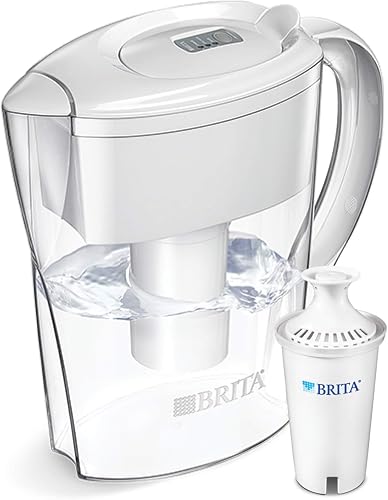
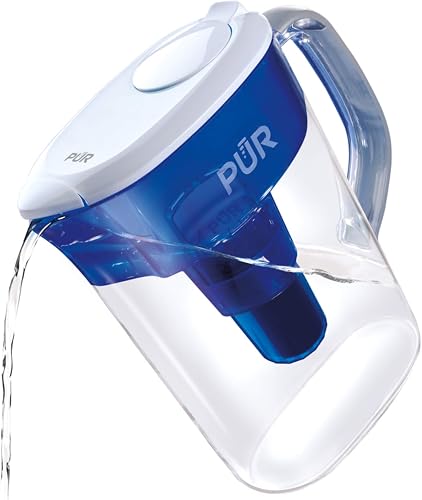
Pitcher filters use different filtration media, and that choice directly affects how long each cartridge lasts. Activated carbon filters, used in models like the PUR PPT700W and many Brita pitchers, trap chlorine taste, odors, and some organic compounds by adsorption. Ion exchange media, found in the Brita 35250, also targets heavy metals by swapping ions. Each media type has a finite capacity: once the active sites are saturated, the filter stops working even if water still flows through it. A higher gallon rating means more active media packed into the cartridge, not simply a bigger physical size. Budget filters and compact cartridges tend to top out at 20 to 40 gallons, while premium designs stretch to 100 or 200 gallons.
How Household Water Quality Affects Replacement Frequency
Hard water, high sediment, and elevated chlorine levels all consume filter capacity faster than clean municipal water would. If your tap water has a strong taste or odor, the activated carbon in your pitcher will saturate more quickly, and you may need to replace the filter well before the gallon target. Sediment particles physically clog microporous media, slowing flow and reducing effective surface area. Households on well water or in areas with aging distribution infrastructure often find their filters need replacing 30 to 50 percent sooner than the rated life. Conversely, households in areas with already low-mineral municipal water may get close to the full rated capacity. There is no universal rule, so watch for slower flow rate or returning taste as practical signals.
How Daily Usage Translates to Real Time
A 40-gallon rated filter, like the one in the Brita 35250 (4.6 stars across 12,200 reviews, $44.10), lasts about 60 days for a household consuming two gallons of filtered water per day. Bump that to four gallons per day, a common figure for a family of four prioritizing filtered water for cooking and drinking, and the same cartridge is spent in roughly 30 days. A 200-gallon rated filter spreads that cost over 100 to 200 days depending on consumption, making it more economical per gallon even if the upfront replacement cost is higher. Tracking gallons is more accurate than tracking weeks, but most people find it easier to note the calendar date on the filter or set a phone reminder based on their typical household usage.
Signs Your Filter Needs Replacing Sooner Than Scheduled
Slower flow through the filter reservoir is one of the clearest signs a cartridge is clogged or exhausted. Returning taste or odor, especially the chlorine smell common in municipal tap water, means the carbon is no longer adsorbing effectively. Some pitchers include a filter change indicator, a floating timer or electronic counter, but those run on elapsed time rather than actual gallons filtered, so heavy users will outpace the indicator. Visible discoloration of the filter cartridge or cloudiness in the filtered water are less common but also signal it is time to change. The Culligan PIT-1 is NSF certified ($26.93, 4.2 stars), and NSF-certified products are tested to performance benchmarks, giving you a measurable standard for when filtration is considered adequate. When in doubt, replace early rather than late.
Storing Your Pitcher to Protect Filter Life
Pitcher filters work best when kept wet. Letting a filter dry out completely can cause channeling, where water bypasses the media rather than flowing through it, reducing filtration effectiveness even before the gallon rating is reached. Keep your pitcher refrigerated when not in use to slow bacterial growth in the reservoir, and always keep the filter submerged in water. If you have not used a pitcher for more than a few days, run a full reservoir through and discard it before drinking. Replace filters that have been left dry for extended periods even if the gallon count suggests they have life remaining. Proper storage adds no cost and meaningfully extends the reliable working life of each cartridge.
Comparing Cost Per Gallon Across Filter Brands
The upfront price of replacement cartridges tells only part of the story. A lower-cost filter rated for 40 gallons may cost more per gallon than a premium cartridge rated for 150 gallons. The PUR PPT700W pitcher costs $35.40 (4.5 stars, 4,300 reviews) and uses activated carbon filtration. When comparing ongoing costs, divide the replacement cartridge retail price by the gallon rating on the box to get a cost-per-gallon figure. Packs of multiple cartridges almost always bring the per-gallon cost down. If your household filters more than four gallons per day, the math often favors investing in a higher-capacity model over buying the cheapest available cartridge repeatedly.
Common mistakes to avoid
- Tracking filter life by weeks on the calendar instead of gallons actually filtered, which leads to over-using exhausted filters.
- Ignoring a slower fill rate in the reservoir, which is often the first sign the cartridge is clogged or near the end of its useful life.
- Letting the pitcher sit unused for days and then drinking the first fill without flushing it through first.
- Allowing the filter cartridge to dry out completely, which can cause water to channel around the media instead of through it.
- Buying the cheapest replacement cartridges without checking whether the gallon rating matches the original manufacturer's spec for that pitcher model.
- Relying solely on the built-in electronic or float indicator, which counts elapsed days rather than actual volume filtered and may not reflect heavy household use.
Frequently asked questions
How many gallons does a typical pitcher filter last?
Most mainstream pitcher filters are rated for 40 gallons per cartridge, which is roughly two months for a household using two gallons of filtered water per day. Premium or high-capacity models can be rated for 100 to 200 gallons. Always check the specific gallon rating on your replacement cartridge box, not just the time estimate on a filter indicator.
Can I use a pitcher filter past its rated gallon life?
Using a filter beyond its rated capacity means you are running water through spent media that may no longer be reducing contaminants effectively. The water may still taste and look fine, but the filtration performance can drop well below the level it was designed to deliver. Replace filters on or before the rated life to stay within the performance range the manufacturer designed the product for.
Does refrigerating my pitcher make the filter last longer?
Refrigeration slows bacterial growth in the reservoir and the filtered water, but it does not extend the gallon-rated life of the filter media itself. Cold temperatures do not meaningfully change how quickly activated carbon or ion exchange media becomes saturated. The benefit of refrigerating your pitcher is water safety and taste quality, not a longer cartridge lifespan.
Why is my pitcher filtering water more slowly than when it was new?
Slower flow usually means the filter media is partially clogged with sediment or that the cartridge is nearing the end of its rated life. Hard water with high mineral content accelerates this process. If your pitcher is well below its rated gallon limit but flow has noticeably dropped, it may help to check that the cartridge is properly seated and fully saturated. If flow remains slow, replace the filter early.
Are all pitcher filter cartridges interchangeable between brands?
No. Pitcher filter cartridges are designed to fit specific pitcher models and are generally not interchangeable between brands. Using the wrong cartridge can result in poor seating, bypassed filtration, or damage to the pitcher housing. Check your pitcher model number against the compatible cartridge list before purchasing replacements. Some third-party cartridges claim cross-brand compatibility, but verify they meet the same performance specifications as the original.